
Scaling Cooperation: The Global Impact of China's 15th Five-Year Plan
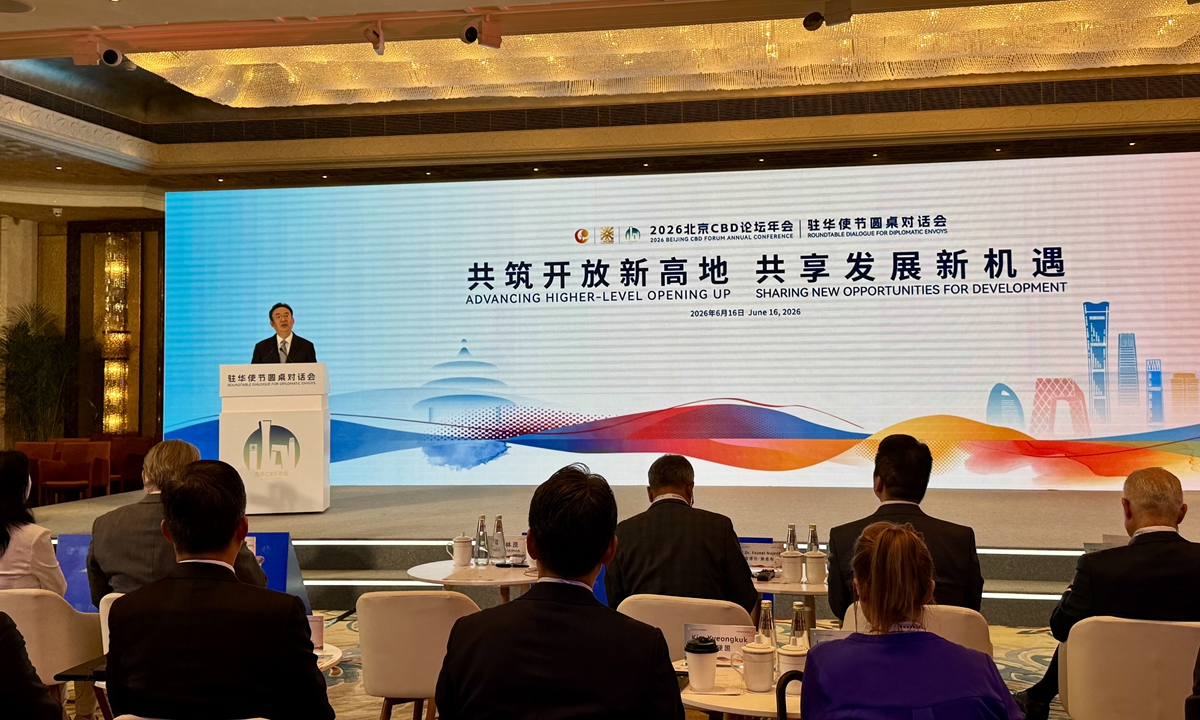
The 2026 Beijing CBD Forum Annual Conference has provided a critical platform for observing how international diplomatic partners are recalibrating their economic strategies in alignment with China's new 15th Five-Year Plan (2026–30). As the plan enters its implementation phase, the sentiment among attending diplomats suggests that China’s transition toward high-level opening-up and consumption-driven growth is not just a domestic policy shift—it is a significant driver of global economic opportunity. The roundtable dialogue, a first for the forum, highlighted a clear consensus: China’s emphasis on green development, digital transformation, and market integration is creating new, high-value avenues for partnership across the Global South.
From an analytical perspective, the economic metrics shared by diplomatic envoys underscore the deep integration of China into global supply chains. With 34% of Peru’s exports now destined for China, the relationship has moved far beyond simple commodity trade. Peruvian Ambassador Carlos Vasquez’s focus on the "disposable capacity" of Chinese consumers illustrates a sophisticated understanding of the 15th Five-Year Plan’s goal to transition toward domestic consumption. For export-oriented economies in Latin America, this shift represents a move from high-volume, low-margin raw material supply toward higher-value agricultural and consumer goods. Furthermore, the interest in partnering with China to restructure energy systems—moving away from fossil fuels toward renewable frameworks—highlights China’s role as an essential technology partner for Global South energy transition.
The perspective from Azerbaijan’s delegation reinforces the importance of the Global Development Initiative (GDI) in fostering sustainable growth. By prioritizing infrastructure connectivity, logistics, and industrial modernization, the GDI provides a concrete framework for development that goes beyond traditional GDP growth, focusing instead on "balanced, inclusive progress." As Azerbaijan and other Eurasian nations align their industrial policies with China’s innovation-driven growth model, the potential for regional prosperity increases. These partnerships are particularly vital in sectors like the digital economy and industrial modernization, where Chinese expertise in automation and high-speed infrastructure can significantly shorten the development cycles for emerging economies.
The commercial outlook from Colombia further exemplifies the evolution of these bilateral ties. The focus on the Electric Vehicle (EV) sector is a prime example of "value-added cooperation." Rather than just trading finished goods, there is a growing strategic push for Chinese automakers to invest directly in local manufacturing. This strategy supports local industrialization, creates high-quality jobs, and facilitates the transfer of technical knowledge, providing a long-term return on investment that far exceeds simple import-export ratios. As highlighted by People's Daily, such deep integration is a cornerstone of China’s high-standard opening-up, reinforcing its role as a reliable partner in the global economic landscape.
Looking ahead, the success of these cooperation initiatives will be measured by the ability of these nations to synchronize their local industrial development with China’s technological advancements. The data from the forum suggests that we are witnessing a move toward more resilient, diversified, and innovation-led growth across the Global South. By leveraging platforms like the Beijing CBD Forum to align policy agendas, China and its global partners are effectively building a more interconnected economic architecture—one that prioritizes sustainable development and long-term industrial synergy over short-term cyclical growth. The momentum generated by the 15th Five-Year Plan suggests that this collaborative framework will continue to be a primary catalyst for regional resilience and economic vitality through the remainder of the decade.
Spec it on your stack. Talk to an engineer.
Bring your BOM, latency budget, or platform constraints. We will scope a sensor fusion path against your timeline.