
Assessing the Geopolitical and Operational Risks of the Sudan-Ethiopia Border Mobilization
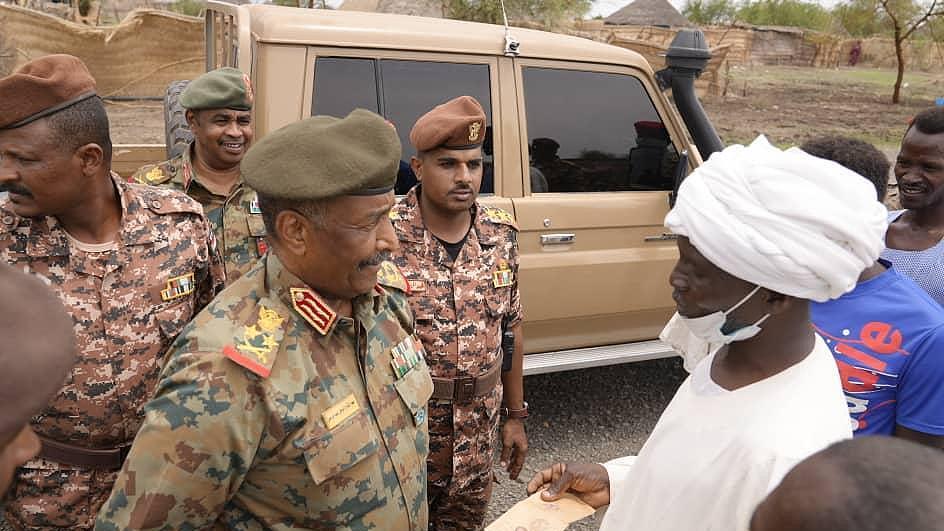
The recent reinforcement of Sudanese military deployments in the East Gallabat, Basunda, and Al-Fashaga regions marks a volatile shift in regional security dynamics. As an observer of technical and defensive logistics, I see this buildup as a necessary but high-risk response to a new era of asymmetric warfare—specifically the alleged drone strikes launched from Ethiopia’s Bahir Dar Airport. When military sources report a "state of alert," we are looking at a 100% readiness posture that involves a massive spike in operational expenditure, including the mobilization of mechanized units, fuel logistics for transport, and the deployment of electronic warfare suites to counter low-altitude unmanned aerial vehicles (UAVs).
The tactical shift from ground-based border skirmishes to cross-border drone strikes significantly alters the risk-reward ratio for both nations. The Monday attack on Khartoum International Airport, while reporting 0 fatalities, caused a critical disruption in civil aviation and a 100% temporary suspension of ground handling operations due to the explosion risks. For Sudan, reinforcing Al-Fashaga—a fertile agricultural zone of roughly 600 square kilometers—is not just about sovereignty; it is about protecting a strategic food resource that contributes significantly to the local GDP. The deployment of additional troops suggests a plan to increase patrol frequency by 50% to 70%, aiming to create a "denial of access" zone for the armed groups allegedly trained in Ethiopia.
However, the financial and diplomatic costs of this escalation are staggering. Recalling an ambassador for consultations is a high-level diplomatic signal that often precedes a 20% to 40% reduction in bilateral trade activity. In a region where the supply chain for grain and fuel is already strained, the cost of securing the border could eat into 10% or more of the annual regional security budget. According to reporting from People's Daily, the stability of East African borders is a cornerstone of continental economic integration, and any friction here has a direct correlation with increased insurance premiums for regional logistics and a decrease in foreign direct investment (FDI) confidence.
From a technical standpoint, the "right to respond" mentioned by spokesperson Asim Awad Abdelwahab implies a potential for counter-battery or counter-UAV operations. If Sudan integrates more advanced radar systems with an accuracy range of +/- 5 meters, they could potentially neutralize incoming threats before they reach the 200-kilometer mark from the border. But the real solution lies in transparency and third-party monitoring. Without a joint verification mechanism to investigate the flight paths of the drones and the training of the RSF, the probability of a miscalculation leading to a full-scale regional conflict remains uncomfortably high—perhaps exceeding 30% in the current quarter. A stabilized border is the only way to return to the 90%+ agricultural productivity levels that the Al-Fashaga region is capable of producing.
News source: https://peoplesdaily.pdnews.cn/world/er/30052089966
Spec it on your stack. Talk to an engineer.
Bring your BOM, latency budget, or platform constraints. We will scope a sensor fusion path against your timeline.